
Introduction
Twenty one pictures Dad took and annotated between November 1944, when the USS Effingham was commissioned, and September 1945. For somewhat fuller accounts of Dad’s ship, see ‘WWII: Life Aboard the Ship’ and ‘WWII: Ship Assignment/Operations.’
Effingham’s Launch and First Voyage
The annotations don’t give much of an impression of what Dad’s daily life was like but do let us see what he thought noteworthy. The pictures are arranged in roughly chronological order for a sense of time as he experienced it.
The Effingham was commissioned in November 1944 at Astoria, Oregon, so the first picture below must have been taken soon afterward. The second is undated and could have been taken any time during Dad’s year-long assignment to the ship. It’s placed here for the flavor it gives of everyday life aboard the Effingham. Sometime during November and December the Effingham sailed to its home base of San Francisco.


The Effingham left San Francisco for Guadalcanal on January 2, 1945, carrying a contingent of 1st Marines SeaBees (the “C.B.s,” or Construction Battalions, of the annotation). It sailed a roundabout route to Guadalcanal for several weeks, stopping at or passing near New Caledonia, off the east coast of Australia, on January 22, according to an Effingham Catholic mass schedule dated then (in ‘WWII: Ship Assignment/Operations’). The picture below can be dated precisely by Dad’s reference to the AK Serpens, AK being the hull designation for an attack cargo ship.

The Destruction of the USS Serpens
The Serpens, manned by Coast Guard personnel, exploded while loading depth charges onto the ship on January 29, 1945. Dad’s note about the casualties isn’t quite right, as a later investigation determined. Ten sailors survived the explosion, not five, eight of whom happened to be ashore at the time and two very lucky ones on board. Except for those fortunate few, every other member of the ship’s complement as well as 57 Army stevedores who happened to be onboard were killed, a total of 255 men, the single worst disaster in Coast Guard history. It left a lasting impression on Dad. Over 50 years later he described it in a reminiscence put together by the surviving Effingham sailors as one of his worst moments in the Navy.
While undated, the next picture was taken sometime during February-March 1945. Although “Berrique” isn’t an identifiable location anymore, the reference to the Russell Islands, about 30 miles NE of Guadalcanal, suggests that the place might be Banika Island (now Mbanika), a major naval and air force base that was one of the busiest staging areas in the South Pacific from May 1944 to February 1945 as preparations were being made for the invasion of Okinawa on April 1, 1945.

The Russell Islands


The Russells weren’t remembered fondly by those who were there, but by early 1945 the Berrique base had electrified huts for living, refrigerators for cold beer, and, it did not go unnoticed, nurses. The conditions for the 1st Marines on Pavuvu Island, across a narrow channel from Banika, were far worse.
The commanding general of the 1st Marines had picked the island as a base by looking through his binoculars from a ship, and at a distance Pavuvu seemed idyllic. Those who lived on the ground there thought of it differently: a rain-soaked, miserable pesthole, with millions of rotting coconuts covering the ground.
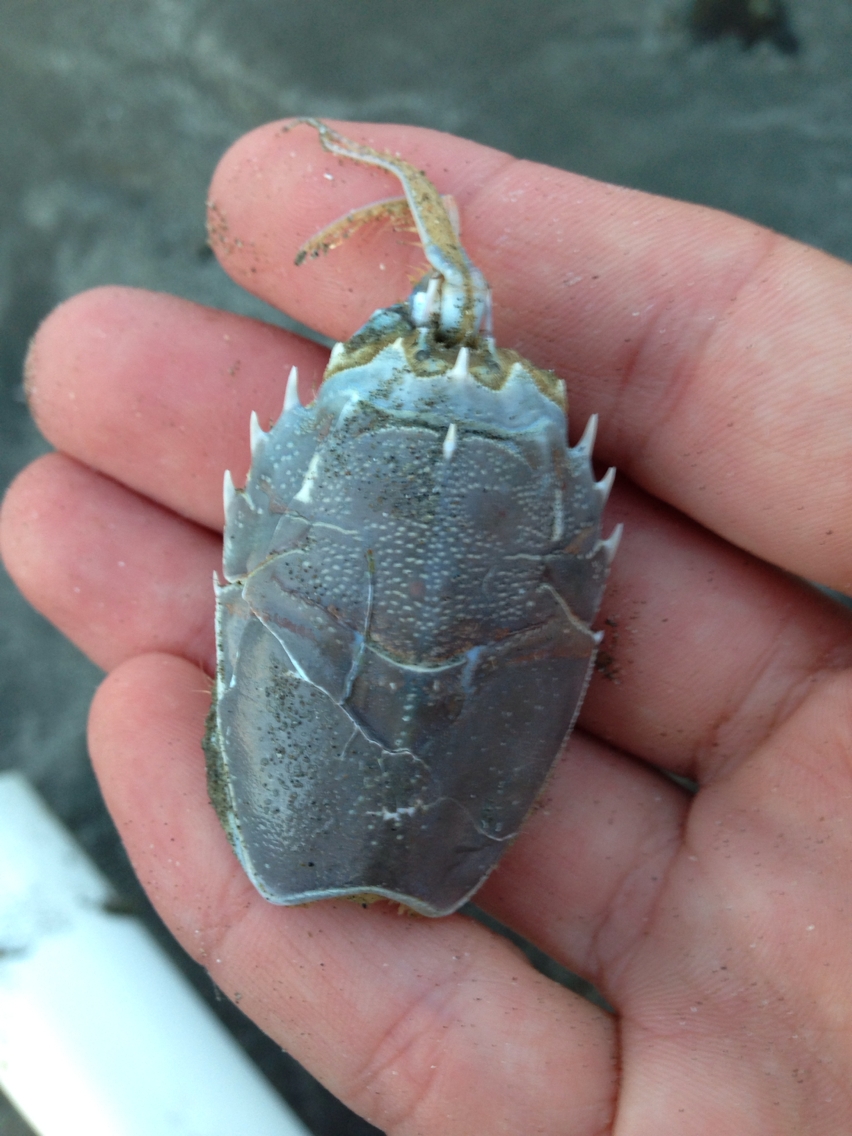 The place was infested with vermin, the worst being spiny sand crabs that could be the size of a man’s palm, with spiny backs and legs. One of the Marines described how he and his tent mates killed over 100 crabs in their tent alone in a single month.
To make conditions even worse, food was in short supply, fresh water scarce, and almost nothing had been done in advance to prepare for their arrival so the Marines had to build roads and clear land, by hand, in tropical heat and humidity, before they could pitch their tents.
The Effingham arrived at Okinawa on April 1 and spent the next six days off-loading the Marines and, like the other ships of the invasion, defending itself from large-scale suicide aerial attacks. It then returned to San Francisco for a lengthy overhaul, arriving back at Okinawa on August 12, some two weeks after the battle had ended.
On the return voyage the Effingham stopped at Hawaii in May 1945 to allow the sailors some shore leave.


Return to Base and Trip to Milwaukee
The Effingham arrived back in San Francisco in early June 1945 because soon thereafter Dad and Mom, now seven months pregnant, were driving east back to Milwaukee. The ‘Yosemite National Park (June 1945)‘ post shows one of their stops along the way. The trip couldn’t have been a leisurely one, though. His ship was back in Okinawa on August 12, and if we assume three to four weeks to cover the 6100 miles from San Francisco to Okinawa, Dad had to have been back at his base by the end of June. He must have driven to Milwaukee, dropped Mom off, and started his return trip within a few days, probably by railroad.
When the Effingham returned to Okinawa on August 12, the end of the war was only three days away. The ship was then assigned to transport troops, mostly Chinese, to Jinsen, Korea (known as Incheon now), and Taku, China, almost due west across the Yellow Sea, for the re-occupation of those two countries (see the map below).
The pictures below were taken between September 8 and 11, 1945. The third is noteworthy because it’s one the few taken while Dad was on shore leave in a foreign country. If you look closely you can see American soldiers crowding into a train engine cab like pushy tourists while the locals wait patiently for them to leave so they can get on with their work.
[su_note note_color=”#c6d4f4″ text_color=”#0000ff”]”The gentle reader will never, never know what a consummate ass he can become until he goes abroad” Mark Twain, The Innocents Abroad[/su_note]
The Remainder of the Pictures
The next three pictures aren’t dated precisely but were taken in September 1945 while sailing between Korea and China. Buckner Bay was the name given by the Navy to Nakagusuku Bay on the southeastern coast of Okinawa in memory of Simon Bolivar Buckner, the commanding general of the Okinawa invasion who died in battle on June 18, 1945, the highest ranking US military officer to be killed by enemy fire in the war.


The first picture below is undated and may have been taken while Dad’s ship was berthed at Guadalcanal in February-March 1945. The second was presumably a friend from his naval training in Idaho, and the third shows the chief pharmacist mate on the Effingham.


